
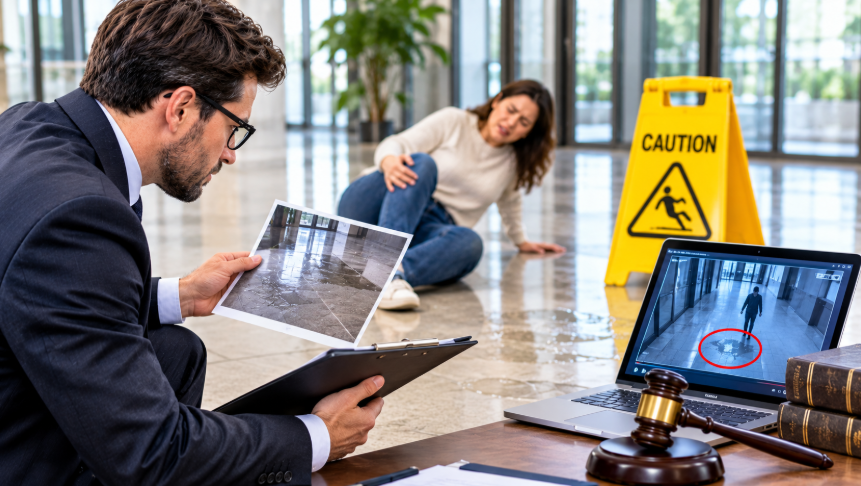

Learn how slip-and-fall lawyers prove property owner negligence, gather evidence, establish liability, and help injured victims pursue fair compensation.
- Notice Connects the Hazard to Responsibility
- Direct Reports Establish Actual Notice
- Conditions Can Point to Prior Knowledge
- Inspection Records Reveal Missed Warnings
- Video and Witness Accounts Preserve Timing
- The Owner’s Response Tests Reasonableness
- Competing Accounts Require Careful Comparison
- Conclusion
Colorado’s changing weather, busy shopping areas, workplaces, and public spaces create different safety concerns for property owners year-round. Rain, snow, melting ice, and routine maintenance issues can make floors and walkways dangerous for visitors. When someone slips and is injured, the immediate concern is often medical care and returning to normal life.
However, seeking compensation raises a harder question: did the property owner know about the danger and have a reasonable chance to address it? Establishing that connection takes more than showing that a hazardous condition existed. It requires a closer look at what happened before the fall and whether the available evidence points to a preventable risk. Working with slip and fall accident attorneys in Colorado can help injured individuals understand what evidence matters, examine the circumstances surrounding the accident, and determine whether the property owner may be held responsible for the harm caused.
Notice Connects the Hazard to Responsibility
A property owner’s responsibility depends on more than the existence of a dangerous condition. The evidence must help show whether the owner knew about the hazard or whether it lasted long enough that a reasonable inspection would have found it. This is why slip and fall accident attorneys examine how the condition arose, how long it remained, and what staff did before the fall. A spill reported by a customer raises different questions from a leak that repeatedly left water in the same walkway. The legal issue is notice, not simply whether the floor was wet.
Direct Reports Establish Actual Notice
A direct report can show that an owner or employee learned about a hazard before someone fell. An incident report, maintenance request, text message, or staff note might record when a spill was reported and who received the information. Witnesses can also describe telling an employee about a broken step or watching staff walk past a hazard.
The timing matters. Evidence that an employee received a warning before the fall can support actual notice. A report created afterward documents the incident, but it does not automatically establish what the owner knew beforehand.
Conditions Can Point to Prior Knowledge
When no one reported a hazard, its physical condition may help establish how long it existed. A dried spill, tracked-in residue, a worn floor covering, or repeated water damage can suggest that the problem predated the fall. Photographs taken soon afterward can preserve details that routine cleaning or repairs would remove.
Those signs need context. A shiny surface alone does not prove that a spill sat for a long time. The location, appearance, surrounding foot traffic, and any earlier complaints help distinguish a sudden accident from an overlooked condition.
Inspection Records Reveal Missed Warnings
Inspection schedules and maintenance logs can show whether staff checked the area and what they found. A log with a long gap before the fall might raise questions about whether inspections were adequate for a busy entrance, food area, or other place where spills occur. You can also compare a recorded check with photographs and witness accounts.
Records should be read closely. A box marked “checked” says little if it lacks a time, location, or description of the floor. Staffing records, cleaning notes, and repair requests can fill in gaps or reveal that a known problem remained unresolved.
Video and Witness Accounts Preserve Timing
Surveillance footage can show when a hazard appeared, who passed it, and how long it remained before the fall. A recording might also show whether an employee inspected the area or placed a warning sign. Because systems can overwrite footage, a prompt written request to preserve relevant video can matter.
Witnesses add details that a camera misses. Someone nearby might identify the source of a leak, describe a warning to staff, or confirm that the hazard was present earlier. Record their names and contact information while memories are fresh.
The Owner’s Response Tests Reasonableness
Notice is only part of the evidence. The response after notice also matters: staff could clean the spill, block access, place a warning, or arrange a repair. If the owner knew about a loose stair edge but left it exposed, photographs, work orders, and prior complaints can show whether the response matched the danger.
A warning sign does not erase every question. Its placement, visibility, and relation to the hazard matter. The evidence should show what the owner did, when the action occurred, and whether it addressed the specific risk.
Competing Accounts Require Careful Comparison
Owners and insurers may argue that the hazard appeared moments before the fall, that the injured person did not see it, or that the condition was obvious. Test the claim against the full record rather than a single statement. Photographs, medical records, incident reports, witness details, and maintenance documents can confirm or contradict each other.
An injured person should keep copies of reports and photographs and write down what was noticed at the scene. Rules differ by case, and results depend on the evidence. A clear timeline helps identify which facts support prior notice and which remain uncertain.
Conclusion
A property owner’s knowledge is usually proved through a timeline assembled from reports, physical clues, inspections, video, and witness accounts. No single record needs to carry the whole claim; the details should support one consistent account of when the danger appeared and how the owner responded. After a fall, preserving scene photographs and requesting that relevant records be kept can help prevent evidence from disappearing before the facts are reviewed.